45 Beautiful Easter Flower Arrangements for Spring Centerpieces
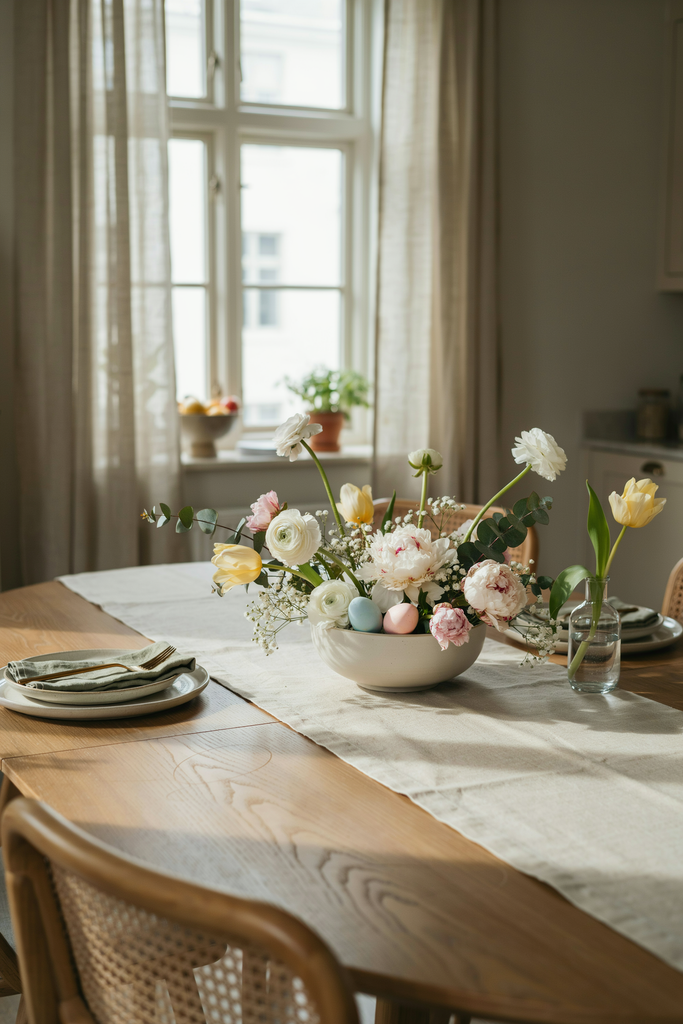
Easter is the perfect time to bring fresh flowers into your home. A few tulips, daffodils, or pastel blooms can instantly make a dining table, kitchen counter, or brunch setup feel brighter and more festive.
These Easter flower arrangements range from simple DIY centerpieces to playful designs featuring Easter eggs, baskets, bunnies, and candy. There are ideas for casual family gatherings as well as more polished spring tables.
The best part is that most of these arrangements are easy to recreate with flowers you can find locally and vases or containers you may already have at home.
- Easy Easter flower centerpieces for dining tables and brunch
- Simple DIY arrangements using tulips, daffodils, roses, and greenery
- Playful Easter floral ideas with eggs, bunnies, baskets, and Peeps
- Low arrangements that work well for family-friendly tables
- Fresh spring flower ideas for kitchens, coffee bars, buffets, and outdoor spaces
- Simple styling tips for creating an inviting Easter tablescape
Easter Flower Arrangements That Set the Tone for Your Spring Table
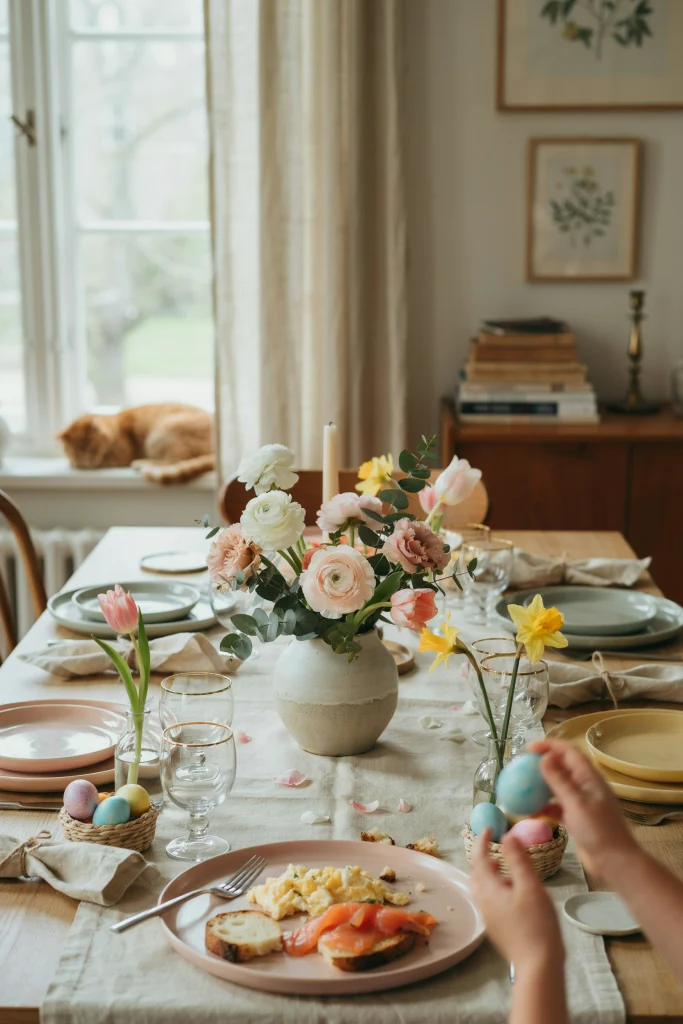
Easter tables often have a lot happening at once, from brunch dishes and desserts to baskets, crafts, and family conversations. The best floral centerpieces add seasonal color without taking over the table or making it difficult for guests to see one another.
For casual celebrations, choose arrangements that feel relaxed and easy rather than overly formal. A simple vase of tulips can sit beautifully beside Easter treats, while smaller floral pieces can be spread along a long table without making the space feel crowded.
If children will be around, low and sturdy arrangements are usually the easiest choice. Wider containers and shorter stems are less likely to tip and leave plenty of room for crafts, snacks, baskets, and other Easter activities.
Pro Tip: Keep the center of your table low enough that guests can easily see and talk to one another.
Simple Easter Flower Centerpieces to DIY
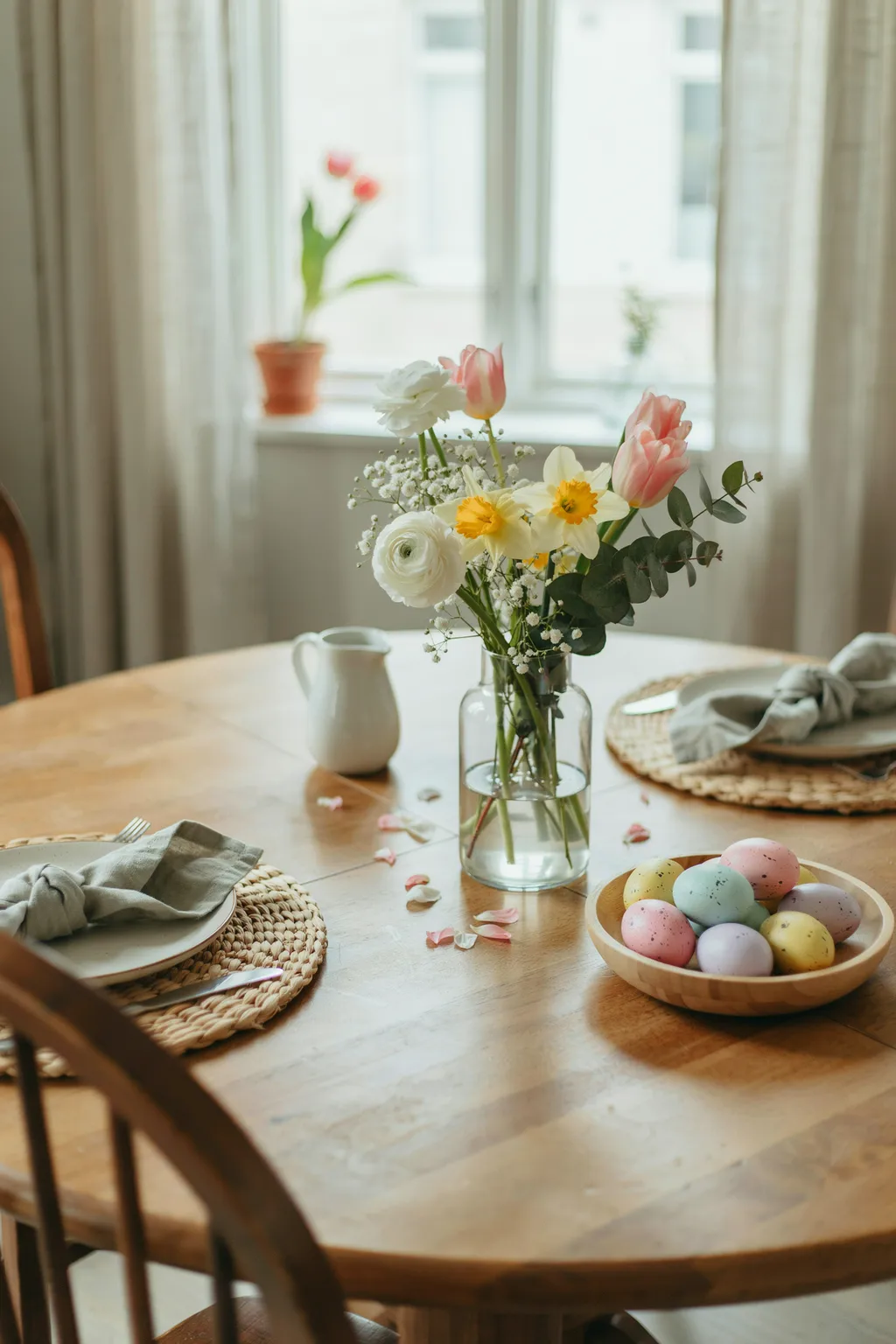
These simple Easter flower centerpieces are great when you want seasonal decor without spending hours arranging flowers. From classic white tulips to colorful spring blooms, each idea can be adapted to suit your table, budget, and decorating style.
1. White Tulips in a Clear Glass Vase

White tulips have a naturally clean and graceful look that works beautifully for Easter. Place a loose bunch in a clear cylinder vase and let the stems and slightly curved blooms create an effortless arrangement. The simple combination feels fresh without making the table look overly decorated.
Pro Tip: Trim the tulips at slightly different lengths so the arrangement has a relaxed, natural shape.
2. Pastel Mixed Spring Blooms in a Low Bowl

A low bowl filled with pink, lavender, cream, and pale yellow flowers brings a soft spring palette to the table. Because the arrangement stays close to the surface, guests can easily see across it during Easter brunch. This style also works well on buffet tables and kitchen islands.
Pro Tip: Choose three or four complementary flower colors instead of trying to use every pastel shade.
3. Yellow Daffodils in a Mason Jar

Bright yellow daffodils instantly give a room that cheerful spring feeling associated with Easter. Place a small bunch in a mason jar for an easy centerpiece that feels casual and welcoming. It is especially fitting for farmhouse-style tables and relaxed family gatherings.
Pro Tip: Add a little greenery around the daffodils if you want the mason jar arrangement to look fuller.
4. Pink Tulips with Eucalyptus Stems

Soft pink tulips paired with eucalyptus create a simple arrangement with both color and texture. The blush flowers keep the centerpiece feeling distinctly spring-like, while the greenery adds an airy, modern touch. It is an easy option when you want something pretty but not fussy.
Pro Tip: Let a few eucalyptus stems extend beyond the tulips for a more natural silhouette.
5. White Hydrangeas in a Ceramic Pitcher

Large white hydrangeas have plenty of visual impact, making them ideal for larger Easter tables. Arranging them in a ceramic pitcher gives the flowers a relaxed, homey feel while keeping the overall look elegant. This combination can also work beautifully for a church luncheon or buffet.
Pro Tip: Use several hydrangea heads close together for a lush arrangement without needing many different flowers.
6. Pastel Carnations in a Vintage Vase

Pastel carnations are an affordable way to add plenty of volume and color to an Easter centerpiece. Their soft, ruffled petals look especially charming in vintage glassware or thrifted vases. Mix several pastel shades together for a cheerful arrangement with plenty of texture.
Pro Tip: Look for secondhand vases at thrift stores to create a beautiful centerpiece while keeping costs down.
7. Mixed Wildflowers in a Wooden Crate

A small wooden crate filled with mixed spring flowers creates a relaxed farmhouse-inspired centerpiece. Use loose wildflowers in different colors and heights so the arrangement feels gathered rather than perfectly structured. It works especially well on kitchen counters, rustic tables, and casual brunch setups.
Pro Tip: Line the inside of the crate with a waterproof container before adding water and flowers.
8. White Roses with Greenery in a Rectangular Vase

White roses paired with simple greenery create a polished Easter centerpiece that never feels too seasonal. The clean color palette works beautifully with traditional tableware, neutral linens, and classic spring decorations. A rectangular vase also spreads the flowers across the table without taking up much vertical space.
Pro Tip: Remove lower leaves from the rose stems before arranging them to keep the water clean.
9. Lavender Stems in Clear Bud Vases

Individual lavender stems look delicate and intentional when placed in small clear bud vases. Line several vases down the center of the table for an easy arrangement that does not require advanced floral skills. The soft purple tone adds a subtle Easter accent without overwhelming the rest of the decor.
Pro Tip: Use odd numbers of bud vases, such as three, five, or seven, for a naturally balanced display.
10. Yellow Ranunculus in a Neutral Stone Vase

Yellow ranunculus bring cheerful color and interesting layers of petals to a spring centerpiece. Their warm yellow shade feels festive without being overly bright, especially when paired with a neutral stone or ceramic vase. This arrangement is simple enough for everyday spring decorating but special enough for Easter.
Pro Tip: Combine ranunculus with a little greenery if you want more height and movement.
11. Pink Peonies in a Wide Glass Bowl

Full pink peonies make an eye-catching centerpiece while keeping the arrangement soft and welcoming. Their large blooms look beautiful when grouped low in a wide glass bowl, making them suitable for a family dining table. The romantic pink color also photographs beautifully in natural spring light.
Pro Tip: Keep the arrangement low and wide so the large blooms create impact without blocking conversation.
12. Mixed Greenery with White Accents

For a quieter Easter centerpiece, let greenery take the lead and add just a few small white blooms. This natural combination works especially well when your table already includes colorful Easter desserts, plates, or decorations. The result feels fresh and understated rather than busy.
Pro Tip: Use different shades and textures of greenery to make a mostly green arrangement feel layered.
13. Tulips Tied with Twine in a Jar

A simple bundle of tulips tied loosely with twine gives Easter decor a cozy, rustic feel. Place the stems in a mason jar or another casual glass container for an arrangement that takes only a few minutes to create. It is an easy choice for farmhouse kitchens and informal Easter tables.
Pro Tip: Leave the twine slightly loose so the tulip stems can naturally spread as they open.
14. Pastel Flowers in Small Milk Bottles

Small milk bottles filled with pastel flowers are perfect for creating several mini arrangements. Spread them across a long table, coffee bar, or buffet instead of using one large centerpiece. The repeated containers make the whole setup feel coordinated while still keeping each floral display simple.
Pro Tip: Use the same type of bottle throughout the display for a cleaner, more intentional look.
15. White Lilies in a Tall Vase

White lilies bring height and a traditional floral feel to Easter decorating. Their clean white petals work well with neutral table settings and classic spring colors. A tall vase makes this arrangement particularly useful for entry tables, buffets, or areas where you want to draw the eye upward.
Pro Tip: Place taller arrangements where they will not interfere with guests’ sightlines across the dining table.
Playful & Decorative Easter Flower Arrangements

If your Easter celebration is more colorful and family-focused, playful floral arrangements can bring extra personality to the table. These ideas combine fresh flowers with recognizable Easter details while still keeping the flowers as an important part of the display.
16. Pastel Flowers with Decorative Easter Eggs

Pastel flowers and decorative Easter eggs make an easy combination for a festive spring centerpiece. Tuck a few colorful eggs around the base or gently between the blooms to add seasonal detail. The result feels cheerful without requiring a complicated floral design.
Pro Tip: Repeat one or two egg colors from your table linens or dishes to make the centerpiece feel coordinated.
17. Tulips Arranged in an Easter Basket

An Easter basket makes a charming alternative to a traditional vase. Fill a small woven basket with colorful tulips for a centerpiece that instantly feels connected to the holiday. This idea works especially well for casual family tables, entryways, and children’s Easter celebrations.
Pro Tip: Place a waterproof container inside the basket so you can safely add water without damaging the woven material.
18. Fresh Flowers with Peeps Accents

Bright spring flowers paired with a few Peeps create a playful centerpiece that children will immediately recognize. Keep the candy accents around the edges of the arrangement rather than covering the flowers. This idea is especially fun for kid-friendly brunches and Easter dessert tables.
Pro Tip: Use wrapped or decorative candy pieces if you want the arrangement to remain food-safe around serving dishes.
19. Mixed Spring Flowers in a Bunny-Shaped Vase

A bunny-shaped vase turns an ordinary bouquet into a distinctly Easter-inspired display. Fill it with pastel spring flowers and place it on a dessert table, children’s table, or kitchen counter. The playful container adds personality while the flowers keep the look fresh.
Pro Tip: Choose a simple flower mix so the bunny-shaped container remains the main decorative feature.
20. White Flowers with Moss and Speckled Eggs

White flowers, natural moss, and speckled eggs create an earthy Easter centerpiece with a more sophisticated feel. The neutral colors work beautifully with wood, linen, and ceramic tableware. It is a good option when you want holiday decor that still feels natural and understated.
Pro Tip: Keep the moss concentrated around the base rather than spreading it throughout the flowers.
21. Mini Floral Arrangements in Egg Cups

Small flowers placed inside egg cups can serve as both decorations and individual place-setting details. Use one or two delicate stems in each cup for a miniature arrangement that takes up almost no table space. This is a particularly sweet idea for Easter brunch.
Pro Tip: Choose flowers with thin stems so they fit securely inside the egg cups.
22. Spring Flowers in a Tiered Tray

A tiered tray gives you multiple levels for displaying small floral arrangements alongside Easter decorations. Add flowers to one or two sections and use the remaining space for eggs, treats, or small seasonal accents. This works particularly well on kitchen counters and coffee stations.
Pro Tip: Keep the tallest pieces toward the center or back of the tray so the display remains visually balanced.
23. Floral Arrangement with Candy-Filled Jars

Fresh flowers paired with jars of pastel candy create a colorful Easter display for coffee bars and dessert areas. The combination of glass, flowers, and candy adds texture without requiring elaborate decorating. Choose flowers that repeat some of the candy colors for a more cohesive setup.
Pro Tip: Use clear jars in different heights to add visual interest without adding more decorative objects.
24. Pastel Blooms in a White Wooden Box

A white wooden box filled with pastel blooms makes a charming centerpiece for long dining tables and buffets. The rectangular shape allows flowers to spread horizontally, giving you plenty of coverage without creating a tall obstruction. Pink, yellow, lavender, and white flowers work especially well together.
Pro Tip: Add floral foam inside a waterproof liner when using fresh flowers to help keep stems evenly positioned.
25. Tulips and Eggs in a Low Oval Vase

Tulips arranged with decorative Easter eggs create a compact centerpiece that feels festive without taking over the table. An oval vase keeps the flowers low and spreads the arrangement naturally across the center. This is a practical choice for Easter brunch when the table also needs room for food.
Pro Tip: Choose eggs in soft neutral or pastel shades so they complement rather than compete with the tulips.
26. Mixed Florals with Bunny Figurines

Small bunny figurines tucked around a spring floral arrangement add a playful Easter detail without making the display feel crowded. Use a simple mix of flowers and place just a few bunny accents around the base. This style works nicely on dining tables, buffets, and children’s party areas.
Pro Tip: Stick to a small number of bunny accents so the arrangement still looks like a floral centerpiece first.
27. Soft Pink Flowers in a Glass Cloche

A glass cloche creates a delicate focal point for soft pink flowers and gives the arrangement a charming, almost storybook quality. Keep the floral display compact so it fits comfortably beneath the glass. This style is especially pretty on dessert tables, sideboards, and small Easter displays.
Pro Tip: Use a low arrangement with sturdy blooms so the flowers do not press against the glass.
28. Greenery with Pops of Yellow Blooms

Greenery and bright yellow flowers create a fresh, uncomplicated Easter centerpiece. The green keeps the design grounded while the yellow blooms provide just enough seasonal color. This combination works particularly well when your table already has colorful food or decorations.
Pro Tip: Choose one dominant greenery and one yellow flower variety for a clean, modern look.
29. Spring Flowers in Colored Glass Bottles

Colored glass bottles provide subtle color while keeping attention on the flowers. Arrange several bottles together using small spring blooms for a casual centerpiece that feels collected and cheerful. This approach is also easy to adapt for a long dining table or buffet.
Pro Tip: Keep the flower varieties similar across the bottles so the different glass colors do not make the display feel chaotic.
30. Mixed Pastel Flowers with Ribbon Accents

Pastel flowers become even more festive when the vase is finished with a simple ribbon. Choose ribbon in a soft spring shade and tie it around the container for a small detail that makes the arrangement feel finished. This is an easy way to personalize a basic bouquet for Easter.
Pro Tip: Use narrow ribbon for a delicate look and avoid oversized bows that can compete with the flowers.
Fresh Spring Easter Flower Arrangements for Any Space
These fresh spring arrangements are designed to work beyond the main dining table. Use them on kitchen counters, coffee stations, buffets, outdoor tables, or individual place settings to carry the Easter floral theme throughout your home.
31. White and Green Florals in a Dough Bowl

White flowers and soft greenery look naturally beautiful arranged inside a wooden dough bowl. The low profile makes it useful for dining tables where you want decoration without blocking views. The combination of natural wood and fresh flowers also gives the space a relaxed farmhouse feel.
Pro Tip: Use a waterproof insert inside the dough bowl to protect the wood when working with fresh flowers.
32. Pastel Flowers in Individual Bud Vases

Individual bud vases are an easy way to decorate a long table without creating one large centerpiece. Place small pastel flowers in several vases and space them naturally along the table. This arrangement feels light, flexible, and especially practical for family-style meals.
Pro Tip: Vary the flower type slightly while keeping the color palette consistent for a collected look.
33. Yellow Tulips in a Metal Pail

A small metal pail filled with yellow tulips brings a cheerful farmhouse touch to Easter decorating. The casual container works especially well on kitchen counters, coffee bars, and informal tables. Yellow tulips provide enough color to make the display feel festive without adding many other decorations.
Pro Tip: Choose a slightly weathered metal container if you want a rustic spring look.
34. Soft Pink Flowers in a Footed Compote

A footed compote bowl adds gentle height while keeping a floral arrangement relatively low. Fill it with soft pink flowers for an elegant centerpiece that works beautifully for Easter brunch. The elevated container also gives a simple bouquet a more finished appearance.
Pro Tip: Keep the blooms slightly wider than the rim of the compote for a soft, rounded shape.
35. Green Hydrangeas in a Neutral Vase

Green hydrangeas offer a subtle alternative to colorful Easter flowers. Their full heads create plenty of volume while the green tone keeps the centerpiece calm and natural. A neutral ceramic vase makes the combination easy to pair with almost any spring table setting.
Pro Tip: Add a few white flowers if you want the arrangement to have a little more contrast.
36. Spring Florals with Linen Table Runner

Loose spring flowers arranged along a linen table runner create an effortless Easter tablescape. Instead of one large centerpiece, spread smaller floral groupings down the table for a relaxed and welcoming effect. The natural texture of linen pairs beautifully with fresh flowers.
Pro Tip: Leave small gaps between floral groupings so the table still has room for dishes and serving pieces.
37. White Flowers in a Rustic Wooden Vase

Crisp white flowers look especially striking against the warmth of a rustic wooden vase. The contrast gives the arrangement character while keeping the color palette simple. This is an easy choice for farmhouse-inspired Easter decorating or neutral spring interiors.
Pro Tip: Add a few leafy stems to soften the transition between the white flowers and darker wood.
38. Mixed Spring Flowers on a Coffee Bar Tray

A small floral arrangement can instantly make an Easter coffee station feel more festive. Place a compact bouquet on a tray alongside mugs, pastries, or seasonal treats. Choose flowers that stay low enough to keep the station practical and easy to use.
Pro Tip: Match one flower color to your mugs, napkins, or other coffee bar accessories for a coordinated display.
39. Pale Yellow Flowers in a Glass Pitcher

A glass pitcher makes a practical and unexpected vase for pale yellow spring flowers. The transparent container keeps the arrangement casual and airy, making it ideal for kitchens, counters, and farmhouse-inspired Easter decor. It is also an easy way to repurpose something you already own.
Pro Tip: Use a pitcher with a wider opening if you want the flowers to spread into a fuller arrangement.
40. Soft Pastel Flowers with Candles

Pastel flowers and simple candles create a warm Easter table with a calm, welcoming atmosphere. Keep the flowers in low containers and place candles around them rather than inside the arrangement. Soft spring colors work particularly well with neutral linens and dinnerware.
Pro Tip: Use flameless candles when children will be moving around the table or when the centerpiece is near food.
41. Mini Spring Bouquets as Place Settings

Small floral bundles can decorate individual place settings while also giving guests a little keepsake to take home. Tie each bouquet with twine or ribbon and place it beside the napkin or plate. This simple idea makes an Easter brunch feel thoughtful without requiring a large centerpiece.
Pro Tip: Keep each bouquet small enough that guests can comfortably sit and eat without moving it.
42. White Tulips in a Textured Ceramic Vase

White tulips paired with a textured ceramic vase create a clean, modern Easter centerpiece. The vase provides visual interest while the flowers keep the overall design fresh and uncomplicated. This combination works especially well with neutral or minimalist spring decor.
Pro Tip: Let the tulips naturally bend instead of forcing every stem into a perfectly upright position.
43. Fresh Greenery with Subtle Floral Accents

A greenery-forward centerpiece gives Easter decorating a modern, natural feel. Add a handful of small blooms for just a touch of color while allowing the foliage to remain the main feature. This style is particularly useful when you want seasonal decor that can transition into the rest of spring.
Pro Tip: Choose greenery with different leaf shapes to create texture without needing lots of flowers.
44. Mixed Spring Flowers in a Clear Rectangular Vase

A clear rectangular vase gives mixed spring flowers a simple, timeless presentation. It works particularly well on buffet tables because the horizontal shape provides coverage without demanding too much space. The transparent glass also keeps attention on the colorful blooms.
Pro Tip: Cut stems at different heights and arrange the fuller blooms toward the center for a balanced shape.
45. Simple Spring Flowers on an Outdoor Easter Table

Outdoor Easter gatherings benefit from simple arrangements that can handle a more relaxed setting. Use sturdy spring flowers in low containers and place them among the tableware without making the setup too formal. Natural daylight will make even a small arrangement look bright and inviting.
Pro Tip: Use heavier containers outdoors so a light breeze does not easily tip your centerpiece.
Styling Tips for Easter Flower Arrangements That Feel Effortless
Beautiful Easter flowers do not need to look perfectly arranged. Start with a container that suits your table, choose a simple spring color palette, and keep the overall shape low enough for comfortable conversation. Often, one thoughtfully placed arrangement looks better than several competing decorations.
Think about the entire celebration when styling your flowers. A centerpiece should work alongside brunch dishes, desserts, baskets, crafts, and other Easter decorations instead of making the table feel crowded. Repeating a few colors throughout the space can make everything feel connected.
For family gatherings, sturdy containers and simple designs are usually the most practical. If children will be reaching across the table, choose wider bases, shorter arrangements, and decorations that can handle a little everyday activity.
Easter flowers are ultimately about creating a home that feels bright, welcoming, and ready for spring. Fresh blooms do not need to be perfect to make a difference; a relaxed arrangement often feels more inviting than something overly styled.
Pro Tip: Before adding more decorations, step back and look at your table from a distance. If the flowers already create a focal point, you may not need anything else.
Easter flowers also carry a deeper seasonal meaning. Tulips, lilies, and daffodils are popular choices because their fresh growth and spring colors naturally connect with themes of renewal, hope, and new life.
That is why even a very simple bouquet can change the feeling of a room. You only need a few fresh stems, a pleasant color combination, and a container that fits your style to create something beautiful and personal.
Pro Tip: Do not worry about making every stem perfect; a slightly loose arrangement usually feels more natural and welcoming.
Bringing Your Easter Table Together
Your Easter centerpiece does not need to be elaborate to make the table feel special. Whether you prefer a simple vase of tulips or a playful arrangement filled with eggs and bunny accents, the flowers should complement the celebration rather than compete with it.
As you finish your Easter decorating, look at how the flowers work with the rest of the room. Consider your brunch dishes, desserts, baskets, place settings, and activities so the floral arrangements feel like part of one cohesive space.
Most importantly, give yourself permission to mix and match. Use containers you already own, combine flowers from different arrangements, and adjust the size to suit your table. The most inviting Easter decor usually feels personal, relaxed, and easy to enjoy.
Pro Tip: Take a quick photo of your finished table before guests arrive. It makes it easier to spot areas that look too crowded or need a small adjustment.
Frequently Asked Questions About Easter Flower Arrangements
What flowers are best for Easter table arrangements?
Tulips, daffodils, hydrangeas, lilies, ranunculus, roses, and fresh greenery are all beautiful choices for Easter. Their spring colors and naturally fresh appearance make them easy to use in both casual and more polished centerpieces. Choose flowers based on the colors, size, and overall style of your table.
Pro Tip: Mix one statement flower with a simple supporting flower and greenery for an arrangement that looks full without becoming complicated.
How do I keep Easter flower centerpieces kid-friendly?
Choose short arrangements with wide, stable bases when children will be sitting nearby. Avoid placing fragile or easily tipped containers near the edge of the table, and leave enough open space for plates, crafts, and other activities. Simple arrangements are often the safest and easiest option for family celebrations.
Pro Tip: Place taller or more delicate flowers on a side table and keep the main dining table low and sturdy.
Can I use mason jars for Easter flower arrangements?
Yes, mason jars are one of the easiest containers for DIY Easter flowers. They work beautifully with tulips, daffodils, wildflowers, and small mixed bouquets and can fit rustic, farmhouse, or casual spring decor. Use one jar as a centerpiece or group several together for a larger display.
Pro Tip: Add twine, ribbon, or a simple seasonal tag around the jar when you want a little extra decoration.
How far in advance can I make Easter floral arrangements?
Most fresh flower arrangements can be prepared a day or two before Easter as long as they are kept hydrated and stored somewhere cool. Recutting the stems and changing the water can help the flowers stay fresh. Arrangements with plenty of greenery may also hold their shape particularly well.
Pro Tip: Keep prepared flowers away from direct sunlight, heat sources, and ripening fruit until you are ready to display them.
Do Easter flower arrangements need to match the rest of my decor?
They do not have to match perfectly, but choosing complementary colors will make the whole space feel more intentional. Neutral containers make this especially easy because they can work with pastel flowers, colorful Easter decorations, or natural spring tones. Focus on coordinating rather than creating an exact match.
Pro Tip: Pick two or three colors from your existing Easter decor and repeat those shades in your flowers.
Make Your Easter Table Feel Thoughtful, Not Overdone
The most successful Easter flower arrangements are the ones that work naturally with your celebration. You should be able to serve food, talk with family, move baskets around, and enjoy the day without worrying about a centerpiece that is too delicate or complicated.
Whether you are decorating for brunch, desserts, Easter baskets, family photos, or a simple spring gathering, there is no need to copy a perfectly styled table. Choose flowers and containers that fit your space and make the decorating process enjoyable.
A relaxed bouquet of seasonal flowers can be just as beautiful as an elaborate floral design. When the centerpiece feels easy, fresh, and personal, the entire Easter table tends to feel the same way.
Pro Tip: Start with the flowers you already have access to, then choose your vase and decorations around them instead of trying to recreate an exact centerpiece.